
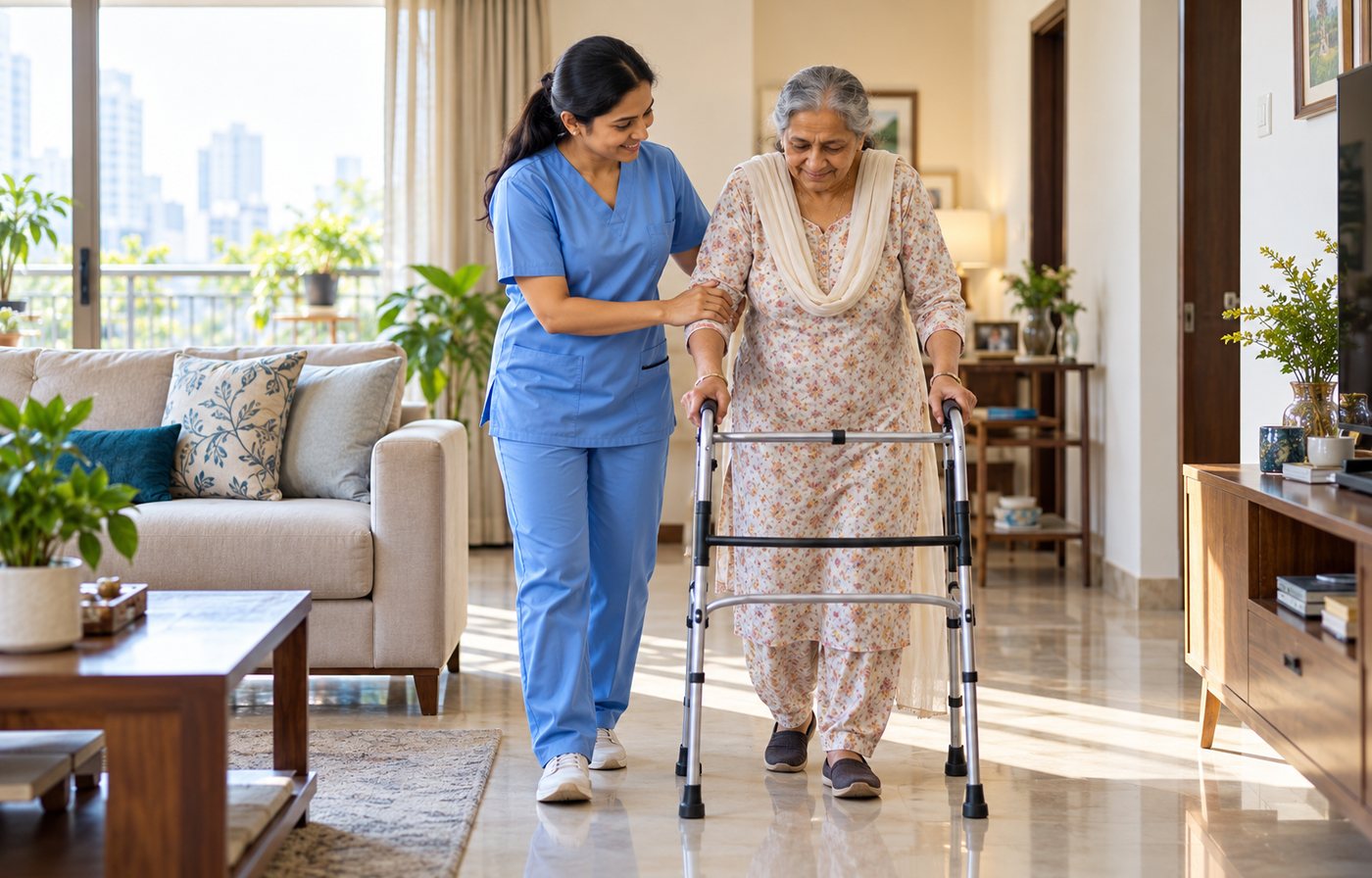
A fall can cause a fracture, a head injury or a loss of confidence that keeps an older person in bed. Most falls happen at home, and many can be prevented with a few simple changes.
Key points
- Bathrooms, bedrooms and night-time toilet trips are the most common danger points.
- Good lighting, non-slip floors and grab bars prevent many falls.
- Medicines, poor vision and low blood pressure raise the risk, so ask the doctor to review them.
- After a fall with a head injury or severe pain, go to a hospital.
Make each room safer
- Bathroom: non-slip mats, grab bars, a seat in the shower and a dry floor
- Bedroom: a night light, a lamp within reach and a bed at a height where feet rest flat on the floor
- Living areas: remove loose rugs, trailing wires and clutter
- Stairs: handrails on both sides and good lighting
- Kitchen: keep daily items at waist level
Daily habits that help
- Wear well-fitting footwear with a firm grip, not loose slippers
- Stand up slowly after lying or sitting
- Use a walking stick or walker if the doctor advises
- Drink enough water, unless the doctor has limited fluids
- Keep gentle exercise going, as the doctor allows
Ask the doctor to review
- Medicines that cause dizziness or sleepiness
- Blood pressure and blood sugar, including low readings
- Eyesight and hearing
- Vitamin D and calcium levels, which a blood test at home can check if the doctor advises
After a fall
- Do not rush to lift the person; check for pain first
- Go to a hospital for a blow to the head, severe pain in the hip, back or neck, inability to stand or bear weight, or if the person takes blood thinners
- Even without injury, tell the doctor, because a fall is a sign that something needs fixing
Frequently asked questions
Why do older adults fall more often?
Weak muscles, poor balance, low blood pressure, some medicines, poor eyesight and cluttered floors all add to the risk.
Should I lift a person who has fallen?
Check for pain, a head injury or a possible fracture first. If there is severe pain, they cannot move a limb or they hit their head, call for medical help rather than lifting.
Can a nurse help prevent falls?
A trained nurse or attendant can assist with walking, bathing and toileting safely, which are the moments when most falls happen.
Not for emergencies. Home healthcare does not replace emergency hospital care. In a medical emergency, contact emergency services or go to the nearest emergency department.