
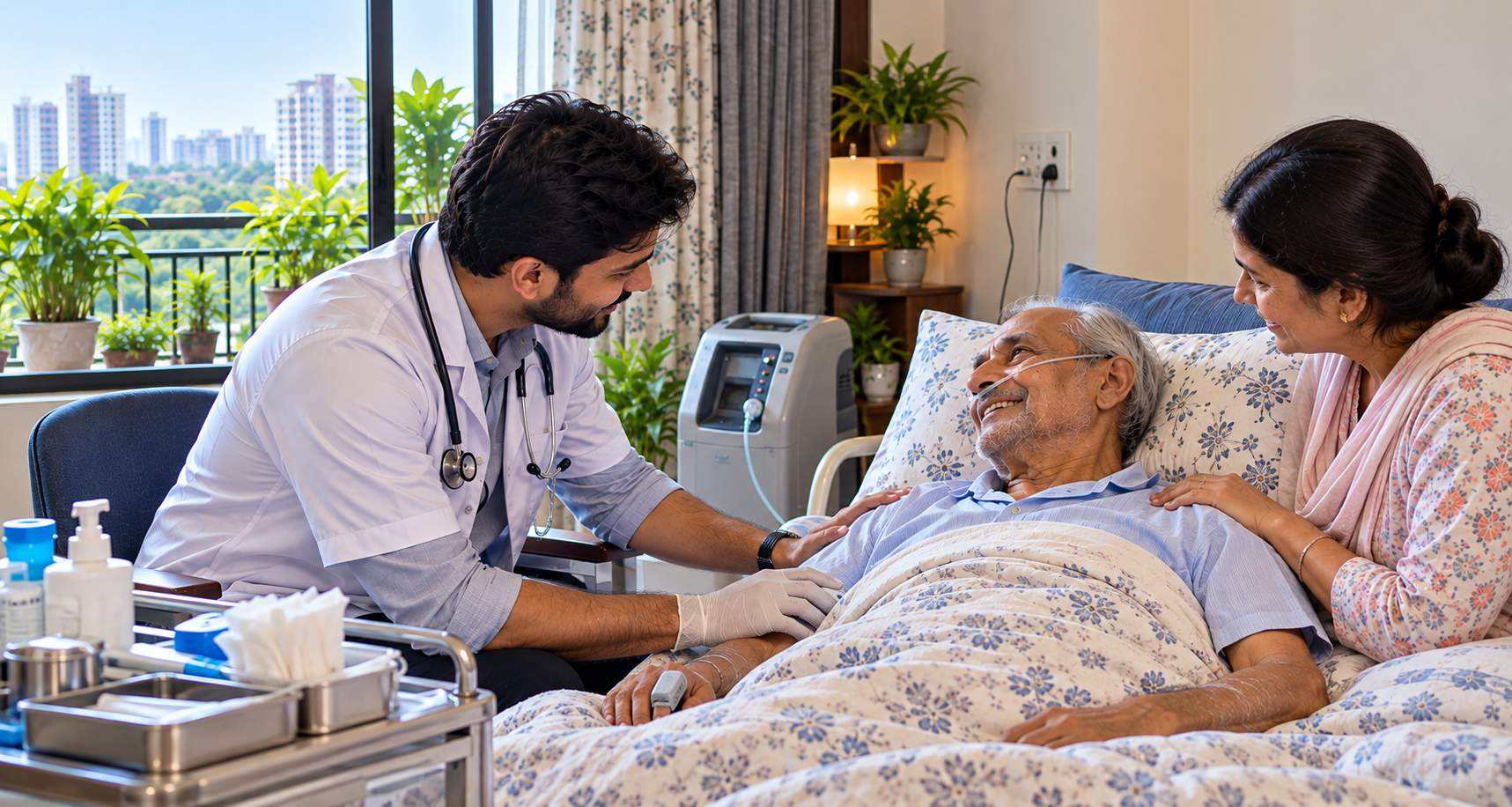
Palliative care focuses on comfort, symptom relief and support for people living with a serious, long-term illness, and for their families. It is not only for the last days of life. It can begin alongside regular treatment and can be given at home.
Key points
- Palliative care aims at comfort and quality of life, not only end-of-life care.
- It can be started early, together with the treating doctor’s plan.
- Many needs, such as dressings, tube care and symptom checks, can be handled at home.
- Severe breathlessness, uncontrolled pain or sudden collapse need urgent hospital care.
When families usually consider it
- A long illness such as advanced cancer, heart, lung, kidney or liver disease, or a stroke with lasting disability
- Repeated hospital visits that are tiring for the patient
- Pain, breathlessness, poor appetite, nausea or sleeplessness that keep returning
- A family that needs guidance on daily care and difficult decisions
What can be done at home
- Regular nursing visits to check comfort, vital signs and symptoms as the doctor advises
- Wound dressings and care for catheters or feeding tubes
- Giving prescribed injections and medicines
- Arranging a blood test at home when the doctor wants one
- Teaching the family how to move, feed and clean the patient safely
- Keeping the treating doctor informed about changes
What it does not replace
Home palliative care works with the patient’s treating doctor, not instead of them. Medicines are given only as prescribed, and anything that needs hospital facilities should be done in a hospital.
Talking to the patient and family
Many families find it hard to start this conversation. A simple way to begin is to ask the patient what matters most to them now, for example staying at home, being free of pain, or having family close. A care plan built around those answers is easier to follow.
Go to a hospital urgently for
Call 108 or go to the nearest emergency department. Our palliative care at home service supports families between hospital visits.
- Chest pain or pressure
- Trouble breathing
- Sudden weakness, a drooping face or slurred speech
- Heavy bleeding
- Fainting, a seizure or being hard to wake
- Severe pain that is not settling with the prescribed medicines
- Unable to swallow medicines or fluids
Frequently asked questions
Is palliative care only for the last days of life?
No. It can start at any stage of a serious illness and continue alongside other treatment. Its aim is comfort and support.
Can palliative care be given at home in Mumbai?
Yes. Nursing visits, dressings, tube care, prescribed injections and family guidance can be arranged at home, while the treating doctor stays in charge of the treatment plan.
Do we need a doctor’s advice first?
Medical tasks such as injections, IV medicines and tube care need a doctor’s advice or prescription. A doctor home visit can help decide the plan if you are unsure.
Not for emergencies. Home healthcare does not replace emergency hospital care. In a medical emergency, contact emergency services or go to the nearest emergency department.