
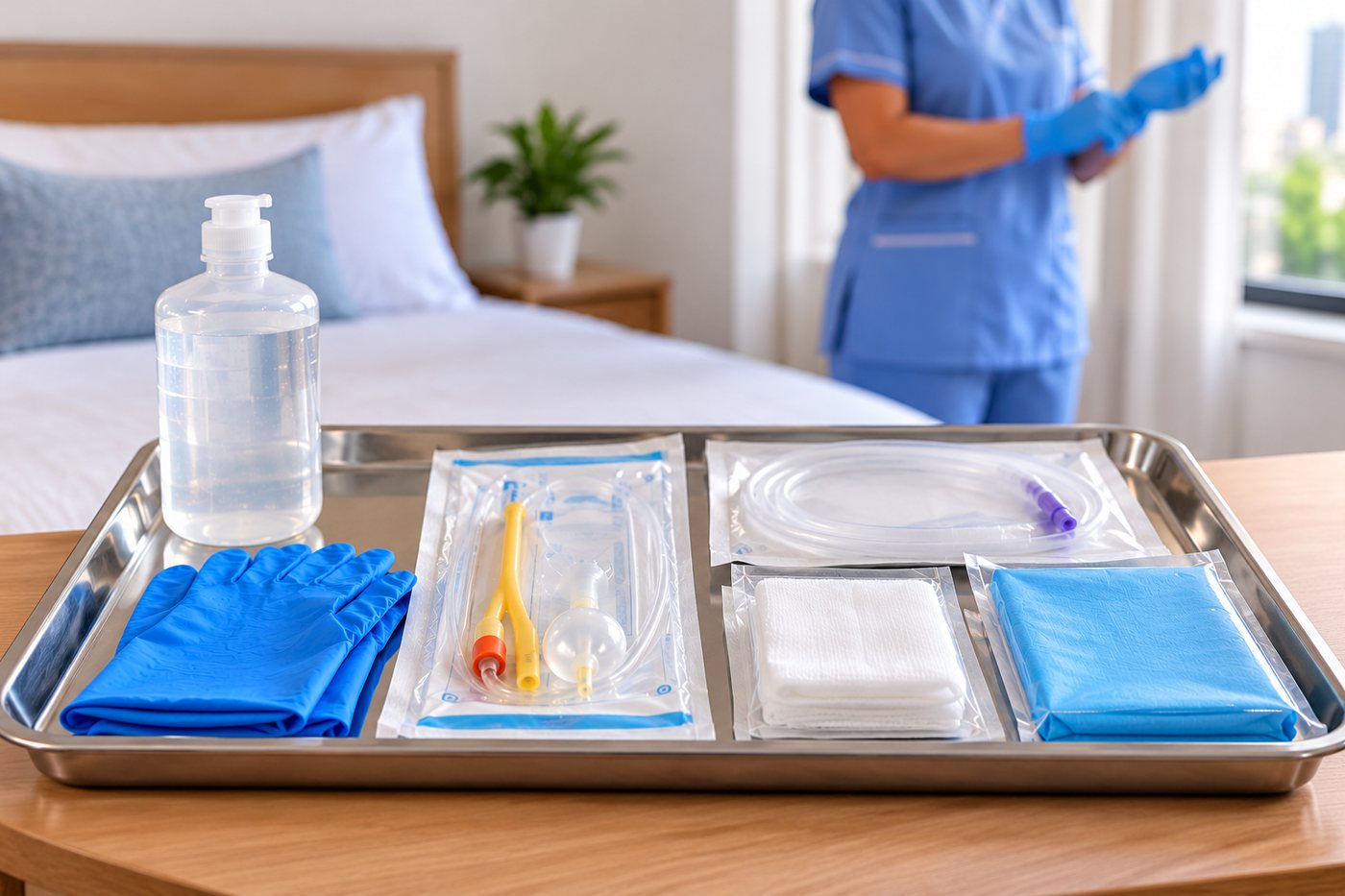
The first days at home after a hospital stay are when small gaps cause big problems. A little preparation before discharge makes recovery safer and calmer for the patient and the family.
Key points
- Collect the discharge summary, medicine list and follow-up date before you leave.
- Prepare a safe bed, a clear walkway and a safe bathroom before the patient arrives.
- Buy the full course of medicines in advance and keep a written chart.
- Plan who will give care, and arrange a nurse if dressings, injections or tubes are involved.
Ask the hospital before you leave
- A written discharge summary with the diagnosis, treatment given and follow-up date
- Every medicine with its timing, and what each one is for
- Warning signs to watch for, and who to call
- Instructions on diet, bathing and activity
- Any supplies needed at home, such as dressings, catheter bags or feeding-tube items
- Copies of reports and scans
Prepare the room
- A clean, firm bed at a comfortable height, with a pressure-relieving mattress if the patient will stay in bed
- Clear walkways, with loose rugs removed
- A non-slip mat and grab bars in the bathroom, and a commode chair if walking is difficult
- Good lighting, including a night light on the way to the toilet
- A bell or phone within reach
- A clean, dry shelf for medicines and supplies
Organise the medicines
- Buy the full prescribed course before the patient arrives
- Keep everything in one box with a written chart of timings
- Use a weekly pill organiser if there are many tablets
- Never stop or change a dose without asking the doctor
- Remove old or expired medicines from the same shelf
Decide who will care for the patient
Choose one family member to coordinate care and speak to doctors. If the patient needs dressings, injections or tube care, arrange a trained nurse early. See home nursing and home healthcare for what can be done at home.
The first 48 hours
Keep a simple log of temperature, food and fluid intake, urine, sleep and any pain, and bring it to every doctor visit. Report fever, new bleeding, increasing pain, breathlessness, confusion or refusal of food and fluids to the doctor the same day.
Go to a hospital urgently for
- Chest pain or pressure
- Trouble breathing
- Sudden weakness, a drooping face or slurred speech
- Heavy bleeding
- Fainting, a seizure or being hard to wake
Frequently asked questions
What should a discharge summary include?
It should list the diagnosis, treatment given, medicines with doses and timings, follow-up date, and warning signs. Ask the hospital to explain anything that is unclear before you leave.
Can nursing care continue at home after discharge?
Yes. Dressings, injections, IV medicines, catheter care and tube care can often be continued at home by a trained nurse, as the doctor advises.
Who should I call if the patient gets worse at night?
For warning signs such as breathlessness, chest pain or confusion, call 108 or go to the nearest emergency department. For other concerns, call the treating doctor or your home-care service.
Not for emergencies. Home healthcare does not replace emergency hospital care. In a medical emergency, contact emergency services or go to the nearest emergency department.