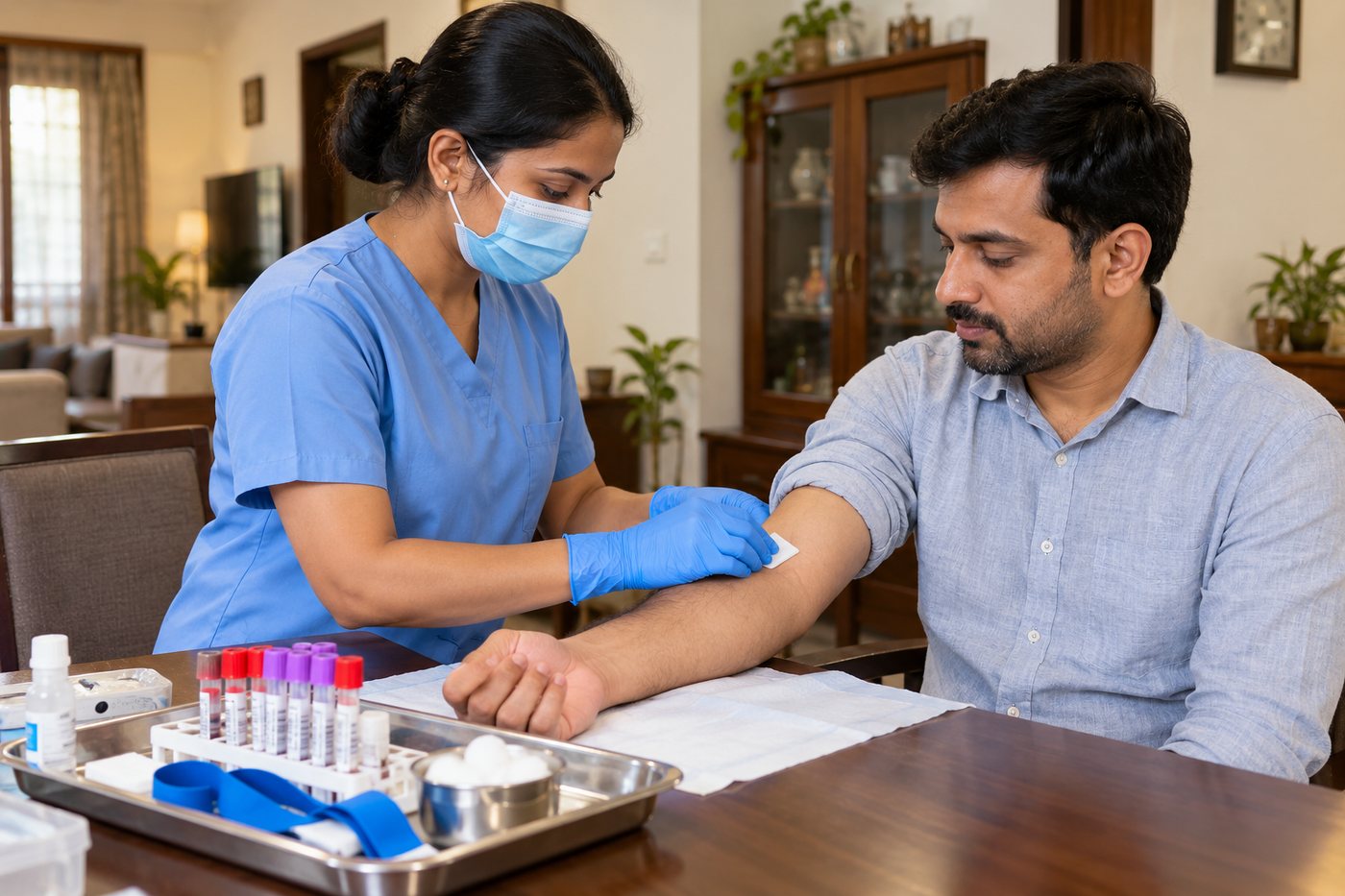
A blood test at home saves a trip for a parent who finds travelling tiring. A few simple preparations help make sure the result is useful.
Key points
- A trained person collects the sample at home and a partner laboratory tests it.
- Fasting sugar and lipid tests usually need a fast of about 8 to 12 hours, while many other tests do not.
- Drink plain water during a fast, and do not skip regular medicines unless told to.
- A doctor should read the report with the patient’s symptoms and earlier results.
How a home blood test works
A trained person collects the sample at your home, and a partner laboratory tests it. You then receive the report and should share it with your doctor. Read more about blood tests at home.
Which tests need fasting
- Fasting blood sugar and lipid profile usually need a fast of about 8 to 12 hours
- Many routine tests, such as a complete blood count or HbA1c, do not need fasting
- Ask when booking, because some tests have their own instructions
Before the sample
- Drink plain water during a fast, because dehydration makes veins harder to find
- Do not stop or skip regular medicines unless your doctor tells you to, and ask what to do about diabetes medicines on a fasting day
- Keep the doctor’s prescription ready
- Mention if the patient faints easily, has thin veins or takes blood thinners
After the sample
- Press the site for a few minutes and keep the bandage on for a while
- A small bruise is common and usually fades
- Report severe swelling, pain or numbness in the arm
Reports
How long a report takes depends on the test, so ask when you book. A report should always be read by a doctor together with symptoms and earlier results. If you need a consultation, a doctor home visit can review the result with you.
Frequently asked questions
Can I drink water before a fasting test?
Yes. Plain water is fine and usually helps. Avoid tea, coffee, milk and juice during the fast.
Do I need a prescription for a blood test?
A doctor’s advice helps choose the right tests. If you are unsure which tests you need, ask a doctor first.
Is a home sample as reliable as a lab sample?
Yes, when the sample is collected correctly and handled and transported properly to the laboratory.
Not for emergencies. Home healthcare does not replace emergency hospital care. In a medical emergency, contact emergency services or go to the nearest emergency department.