
Older adults can have a serious infection with only a mild fever, or none at all. Confusion, unusual sleepiness or sudden weakness can be the first sign. This guide helps you decide what to do, and when not to wait.
Key points
- Check temperature, breathing, fluid intake and alertness first.
- Home care with a doctor’s guidance is reasonable only if the person is alert, drinking and improving.
- Confusion, breathlessness or very little urine need urgent hospital care.
- Do not use leftover antibiotics or add extra doses of fever medicine on your own.
Check these first
- Temperature with a thermometer, remembering that readings under the arm run lower
- Pulse and breathing rate
- Oxygen level, if you have a finger oximeter
- Is the person drinking, and passing urine as usual?
- Are they alert and behaving normally?
Home care with a doctor’s guidance may be reasonable when
- The person is alert and talking normally
- They are drinking fluids and passing urine
- There is no breathing difficulty or severe pain
- They are improving within the first day
Go to a hospital urgently when
- Breathing is fast or difficult
- There is new confusion, extreme drowsiness or the person is hard to wake
- There is chest pain or fainting
- There is very little urine, or fluids cannot be kept down
- There is a stiff neck, severe headache or a new rash
- The patient has heart, kidney or lung disease, diabetes or cancer treatment and is getting worse quickly
- Fever continues for more than two to three days without improvement
In Mumbai’s rainy months
Fever can be due to a viral infection, dengue, malaria or a water-borne infection. A doctor decides which tests are needed, and some medicines are unsafe in conditions such as dengue. We can arrange a blood test at home when a doctor advises one.
What not to do
- Do not give leftover antibiotics or painkillers from old prescriptions
- Do not add extra doses of fever medicine on your own
- Do not wait overnight if warning signs appear
How a doctor home visit helps
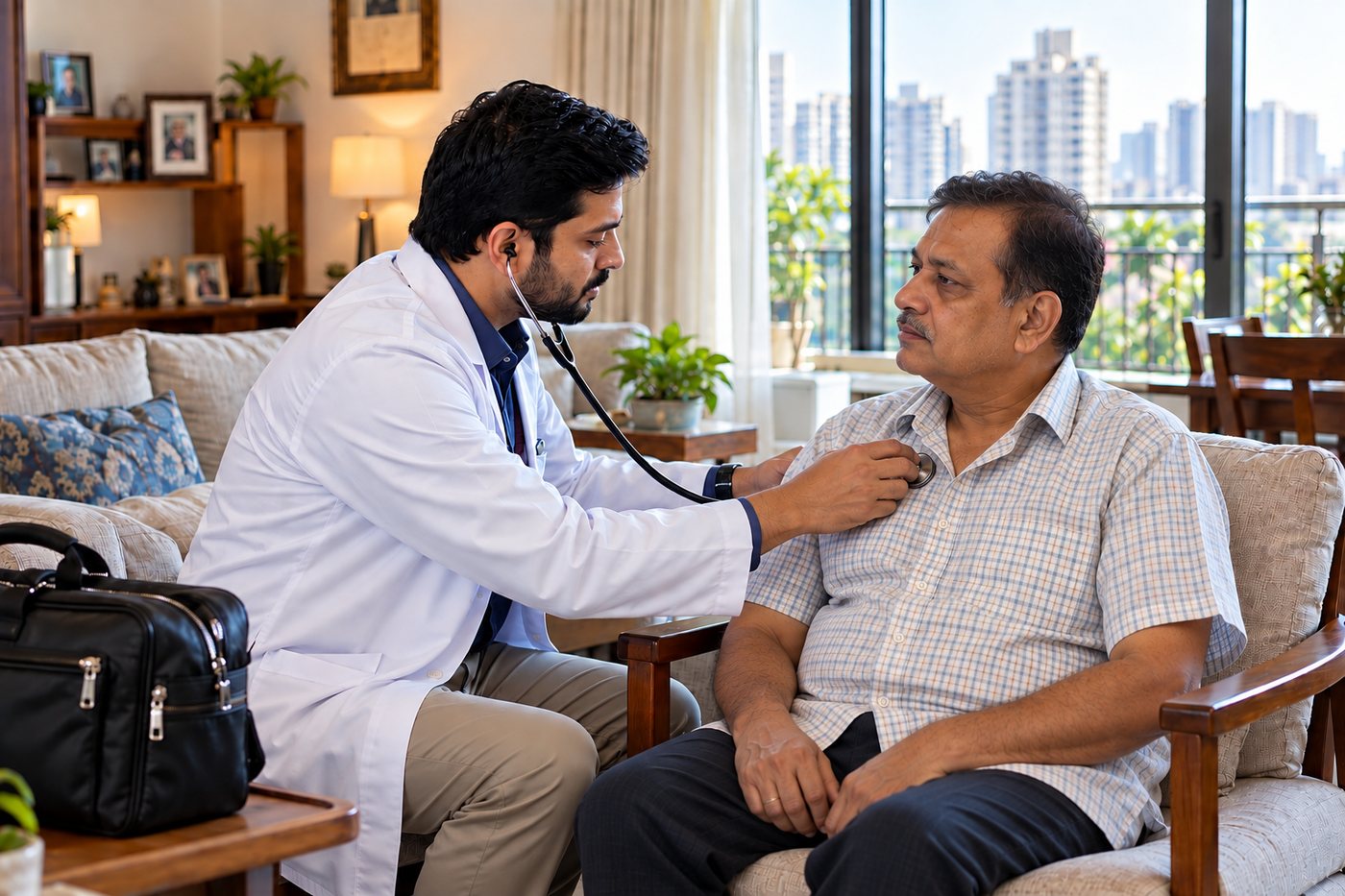
A doctor can examine the patient at home, decide whether tests are needed, advise on treatment and tell you plainly if hospital care is the safer choice. Read how a doctor home visit works.
Frequently asked questions
What temperature counts as a fever in an older adult?
A reading of about 37.8°C (100°F) or more is generally treated as a fever. Older adults may be seriously ill with a lower reading, so look at behaviour and breathing as well.
Should I give paracetamol for fever?
Ask a doctor for the right medicine and dose for the patient. Do not repeat doses more often than prescribed, and do not use old prescriptions.
When should I arrange a blood test?
If the fever lasts more than a day or two, or if the doctor suspects dengue, malaria or another infection, tests may be advised. A doctor decides which ones.
Not for emergencies. Home healthcare does not replace emergency hospital care. In a medical emergency, contact emergency services or go to the nearest emergency department.