
Recovery after surgery depends as much on the first two weeks at home as on the operation itself. Clear instructions, regular wound checks and gentle movement help most patients heal safely.
Key points
- Follow the surgeon’s instructions on wound care, medicines and activity.
- Keep the wound clean and dry, and check it daily for infection.
- Move as advised, because gentle activity lowers the risk of clots and chest infection.
- Call the surgeon the same day for fever, bleeding, increasing pain or wound changes.
Before you leave the hospital
- Ask for written instructions on wound care, bathing, diet and activity
- Ask which medicines to take, and which to stop or continue
- Ask when stitches or staples will be removed
- Note the surgeon’s contact number and the follow-up date
Pain and medicines
Take pain medicine exactly as prescribed. Do not combine painkillers on your own, because some combinations are unsafe. If pain is getting worse instead of better, tell the surgeon.
Wound care
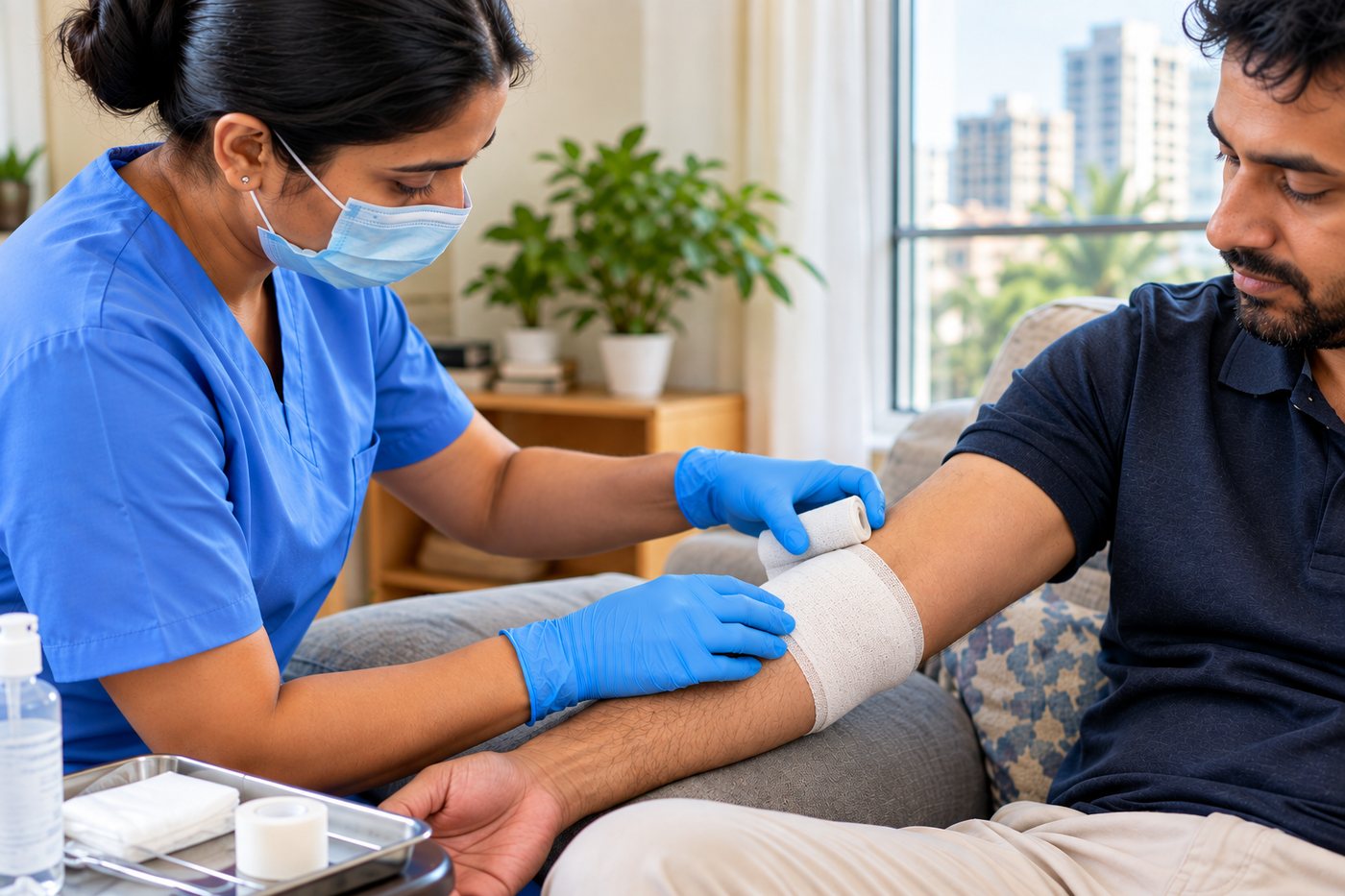
A trained nurse can handle wound dressing at home and check healing at each visit. Read the signs of infection in our wound care guide.
- Keep the dressing clean and dry unless told otherwise
- Wash your hands before touching it
- Check for redness, swelling, discharge, a bad smell or an opening wound
- Do not apply creams, powders or home remedies unless the doctor advises
Movement and clot prevention
Gentle walking as advised helps circulation, breathing and bowel function. Staying in bed for long periods raises the risk of blood clots and chest infection.
- Calf pain, swelling or warmth in one leg needs medical attention soon
- Sudden breathlessness or chest pain is an emergency: call 108
Food, fluids and bowels
- Eat small, regular meals with protein, and drink fluids unless restricted
- Constipation is common after surgery and some painkillers, so tell the doctor if it persists
- Keep a record of intake and bowel movements
Call the surgeon the same day for
- Fever or chills
- Bleeding that soaks the dressing
- Increasing pain or swelling
- Pus, a bad smell or an opening wound
- Persistent vomiting or no bowel or urine output
Frequently asked questions
When can I bathe after surgery?
It depends on the surgery and the dressing. Follow your surgeon’s instructions, and ask before getting a dressing wet.
When can stitches be removed?
Timing depends on the site and the type of surgery. The surgeon will say when. Do not remove stitches yourself.
Can a nurse look after the wound at home?
Yes. A trained nurse can change dressings and watch for problems, and refer you back to the surgeon if needed.
Not for emergencies. Home healthcare does not replace emergency hospital care. In a medical emergency, contact emergency services or go to the nearest emergency department.