
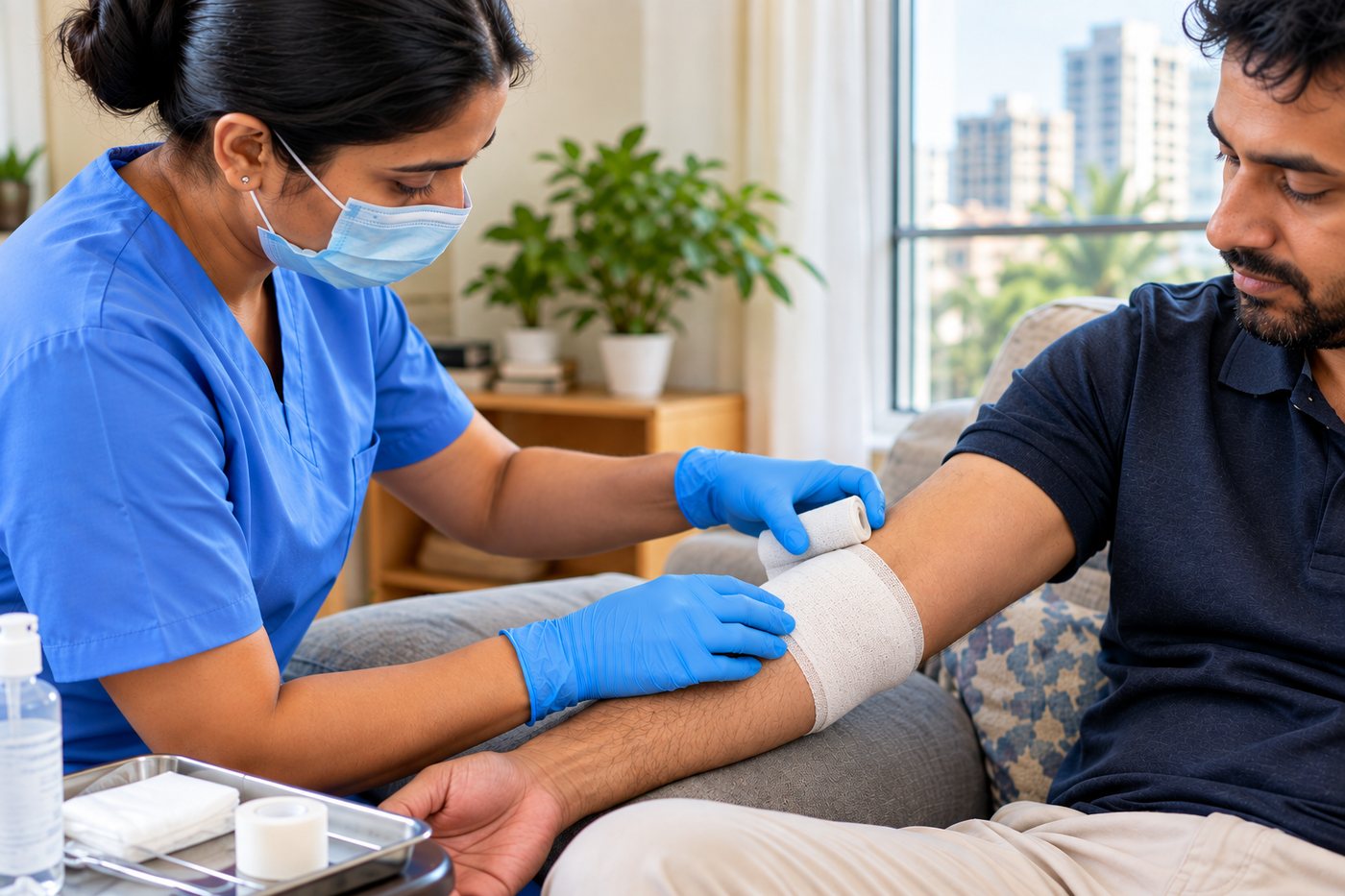
A clean wound with a suitable dressing heals faster and safer. Most dressings can be done at home by a trained nurse, which saves repeated trips to a hospital or clinic.
Key points
- A proper dressing uses clean hands, clean supplies and a dressing suited to the wound.
- Spreading redness, pus, a bad smell or fever are signs of infection.
- Diabetes and poor circulation slow healing, so ask for a check early.
- Do not apply turmeric, powders or unprescribed creams to a wound.
What a proper dressing involves
- Hands are cleaned and clean or sterile supplies are used
- The old dressing is removed gently, without tearing the skin
- The wound is cleaned as the doctor has advised
- A dressing suited to the wound is applied
- The wound is checked for healing and the next change is planned
Signs of infection
- Redness that spreads, or skin that feels hot
- Swelling or increasing pain
- Pus, cloudy discharge or a bad smell
- Wound edges that open up
- Fever or chills
Wounds that need extra attention
Healing is slower in people with diabetes, poor circulation, poor nutrition or pressure injuries. In these patients a small wound can become serious quickly, so ask for a check early. See our guide to preventing bedsores for pressure injuries.
Do
- Keep the dressing clean and dry, unless told otherwise
- Change it as often as advised
- Wash your hands before touching it
- Eat enough protein, drink enough fluids and keep blood sugar controlled
Do not
- Do not apply turmeric, powders, oils or unprescribed creams
- Do not remove stitches yourself
- Do not ignore a wound that is not improving after a few days
When to see a doctor
Any sign of infection, or a wound that is not healing, should be seen by a doctor soon. A spreading red area with fever needs attention the same day. Our nurses provide wound dressing at home in Mumbai.
Frequently asked questions
How often should a wound dressing be changed?
It depends on the wound and the dressing type. Follow the doctor’s or nurse’s schedule, and change it sooner if it becomes wet, soiled or loose.
Can I wash a wound at home?
Only as your doctor or nurse has advised. Some wounds can be gently cleaned, while others should be kept dry.
Why is my wound not healing?
Infection, diabetes, poor circulation, pressure on the area or poor nutrition can all slow healing. A doctor should look at any wound that has not improved in a few days.
Not for emergencies. Home healthcare does not replace emergency hospital care. In a medical emergency, contact emergency services or go to the nearest emergency department.