
Diabetes in older adults needs steady daily habits more than dramatic changes. A clear routine for medicines, meals, sugar checks and foot care prevents most emergencies.
Key points
- Take medicines at the same times each day, as the doctor prescribed.
- Check blood sugar as advised and keep a written log.
- Know the signs of low sugar and how to treat them.
- Check the feet every day, and see a doctor early for any wound.
Medicines and meals
- Take diabetes medicines at the same times each day, and never change doses without asking the doctor
- Keep meals regular, because skipped meals with medicines can cause low sugar
- Include vegetables, protein and whole grains, and limit sweets and sugary drinks
- Drink water through the day
Checking sugar at home
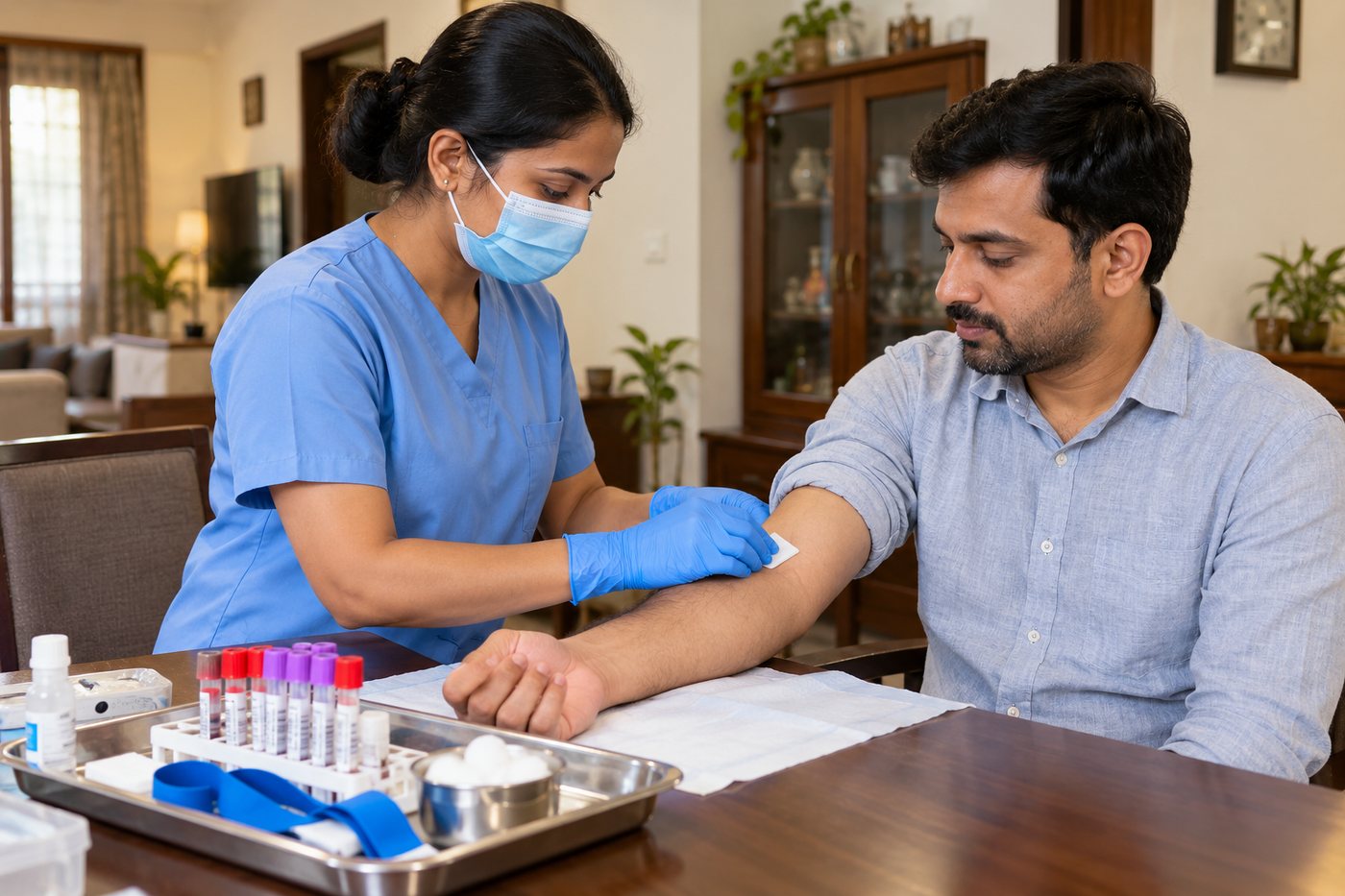
Ask your doctor how often to check and what the target range is for the patient, because targets differ with age and other illnesses. Write each reading with the time in a log and bring it to every visit. We can also collect samples for blood tests at home.
Low sugar: what to look for
If the person is awake and can swallow, give about 15 grams of quick sugar, such as glucose tablets or half a glass of fruit juice, and recheck after 15 minutes. If they are drowsy, cannot swallow safely or do not improve, do not put food or drink in the mouth and call 108.
- Sweating, shakiness or a fast heartbeat
- Hunger, dizziness or a headache
- Confusion, unusual behaviour or drowsiness
High sugar
Very high readings with thirst, frequent urination, vomiting or drowsiness need a doctor the same day. Illness can raise sugar, so call the doctor when an older adult with diabetes is unwell.
Daily foot care
Wounds heal slowly in diabetes. Our nurses can provide wound dressing at home when a doctor advises.
- Look at both feet every day, including between the toes
- Wash and dry them gently, then moisturise but not between the toes
- Wear well-fitting footwear and never walk barefoot
- Do not cut corns or calluses yourself
- Show any blister, cut or colour change to a doctor early
Regular check-ups
Ask the doctor about regular checks of HbA1c, kidney function, eyes and feet. Elderly care at home visits can help keep track of medicines and readings between clinic visits.
Frequently asked questions
What is a normal blood sugar for an older adult?
Targets differ for each person. Ask the treating doctor for the range that suits the patient, and note it on the log sheet.
How often should an older adult with diabetes be checked?
It depends on treatment and health. The doctor decides how often to check sugar and which tests to repeat.
Can diabetes care be managed at home?
Much of the daily routine can be, with regular medical review. Emergencies such as very low sugar that does not improve need hospital care.
Not for emergencies. Home healthcare does not replace emergency hospital care. In a medical emergency, contact emergency services or go to the nearest emergency department.